Graham married Mary Ella Roof of South Carolina probably around 1902. Their son Herbert Roof Graham was born in 1903 and daughter Edith M. Graham in 1905. Frank Monford Graham died August 25, 1931 in Greensboro, Georgia and is buried at the Wesley Chapel Cemetery, Greensboro, Greene County, Georgia. His tombstone is inscribed “The Holiness Singer and Preacher.” His wife Ella and son Herbert are also buried there. What happened to Edith is presently unknown.
Frank M. Graham was a Wesleyan Methodist pastor, as well as a singer, songwriter and evangelist. Hymntime.com says that he served as District Superintendent of the Wesleyan Methodist Church in northern Georgia from around 1895 to about 1915, and that in 1906 he was one of the founders of the Wesleyan Methodist Bible Institute (now Southern Wesleyan University) at Central, Pickens County, South Carolina. In 1907 he served as president the North Georgia Conference of the Wesleyan Methodist Church and served the Wesley Chapel Circuit – Wesley Chapel, Rebecca and Winder churches (Proceedings of the North Georgia Annual Conference of the Wesleyan Methodist Connection, November, 1907 pp. 2-4, 10).
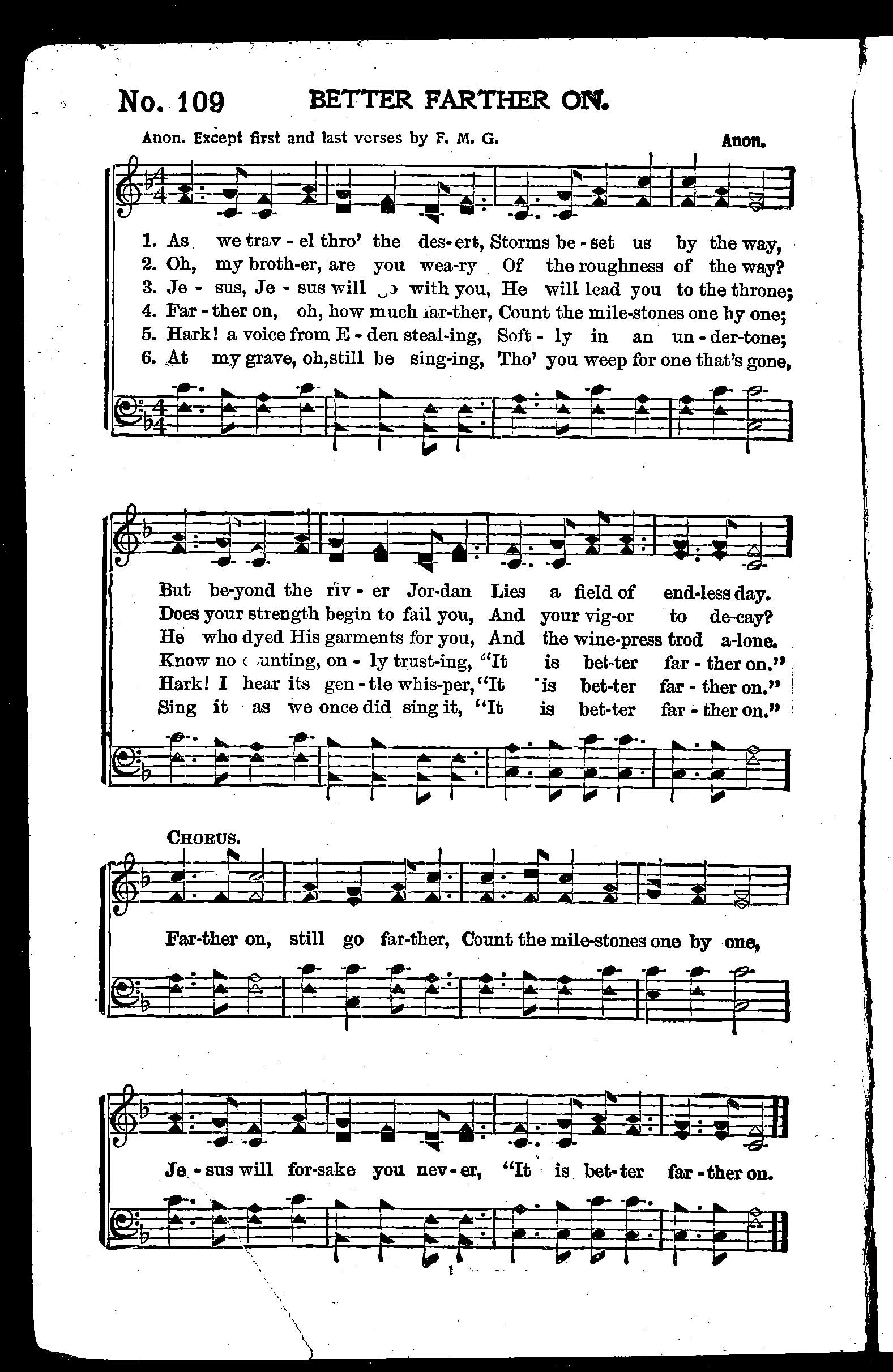
Graham was a prolific composer, writing possibly as many as 100 songs. His most popular by far is “The Old Account (was settled long ago)”. He wrote two stanzas for the song “Better Farther On” – which song continues in use in various places – including being recorded by the Carter Family. “Don’t Grieve Your Mother” was published in the J. L. White editions of The Sacred Harp (1909-1911) and is still sung today. Many will recognize the words of his prohibition tune “Jim and Me”.
The pail that holds the milk today, he used to fill with beer
But he’s not spent a cent for drink in now almost a year;
Just look into the cupboard, sir, there’s sugar, flour and tea,
That’s what our God has done for us – has done for Jim and me.
Graham published at least eight editions of Songs for Jesus, the first being a hymn book without music. These books were particularly conceived for revivals and gospel meetings, as seen in his subtitle “The Book You Need for Revivals.” His tunes appear in many other song books as well. One commenter stated that Graham believed his songs were gifts from God, and therefore did not copyright any of his work so others could use them.
Books compiled by Frank Monford Graham
- Songs for Jesus (words only) Before 1902
- Songs for Jesus: the Book You Need for Revivals, Pelzer, SC: Frank M. Graham, Cincinnati, OH: Armstrong & Fillmore, 1902
- Songs for Jesus, No. 2, Greensboro, GA: Frank M. Graham, Cincinnati, OH: Armstrong Printing Company, circa 1905
- Songs for Jesus, No. 1 and No. 2 combined, Greensboro, GA: Frank M. Graham; Cincinnati, OH: Armstrong Printing Company, 1906
- Songs for Jesus, No. 3, Greensboro, GA: Frank M. Graham, 1910
- Songs for Jesus, No. 4, Greensboro, GA: Frank M. Graham, 1911
- Songs for Jesus, No. 5 Greensboro, GA: Frank M. Graham, 1914
- Songs for Jesus, No. 6, Greensboro, GA: Frank M. Graham, after 1914
A picture of the Graham family can be found HERE.
* In Songs for Jesus No. 6, Graham credits himself for the music but not the words of “Jim and Me” – neither does he credit the words to anyone else. Some other sources credit the words to Merritt A. Stipp. For example, the Oshkosh (Wisconsin) Northwestern newspaper describes Merritt A. Stipp as “a vocalist who has made himself famous by singing his song, ‘Jim and Me’” (Saturday, January 31, 1914, p. 15).
** It is my (unproven) assumption that Graham traveled south to help reestablish the Wesleyan Church there.


No comments:
Post a Comment